
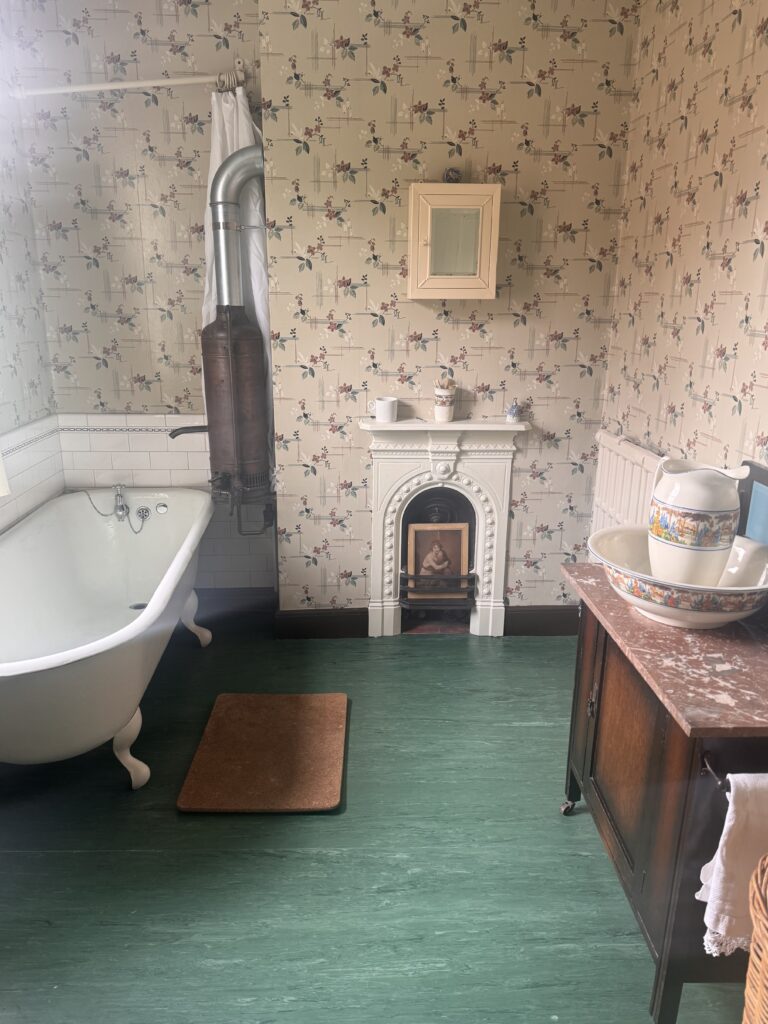
My house didn’t have a bathroom until the 1930s. Therefore, I wanted to recreate a bathroom that was true to its history rather than copy an earlier style. See my earlier blog post on creating the Edwardian bathroom style.
Unfortunately, there was little evidence of what the original bathroom looked like.
However, I had a few clues:
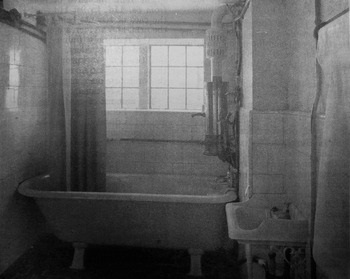
- A relative of the 1930s tenants said there was a roll top bath with tiling and a hot water geyser, but no sink.
- We found a 1930s border tile in the garden.
- The original distempered walls weren’t oil painted, suggesting they were later wallpapered.
- Professional paint analysis shows that the door was painted white from the 1920s and was repainted mid-blue from the 1950s.
- Some evidence that the skirtings were painted various brown shades.
Here’s how I went about this restoration journey.
The fittings
Sanitaryware catalogues of the period have a range of differing styles.
Roll top baths were starting to fall out of favour in the 1930s, but were still the cheapest. Panelled baths were increasingly popular for the middle classes.
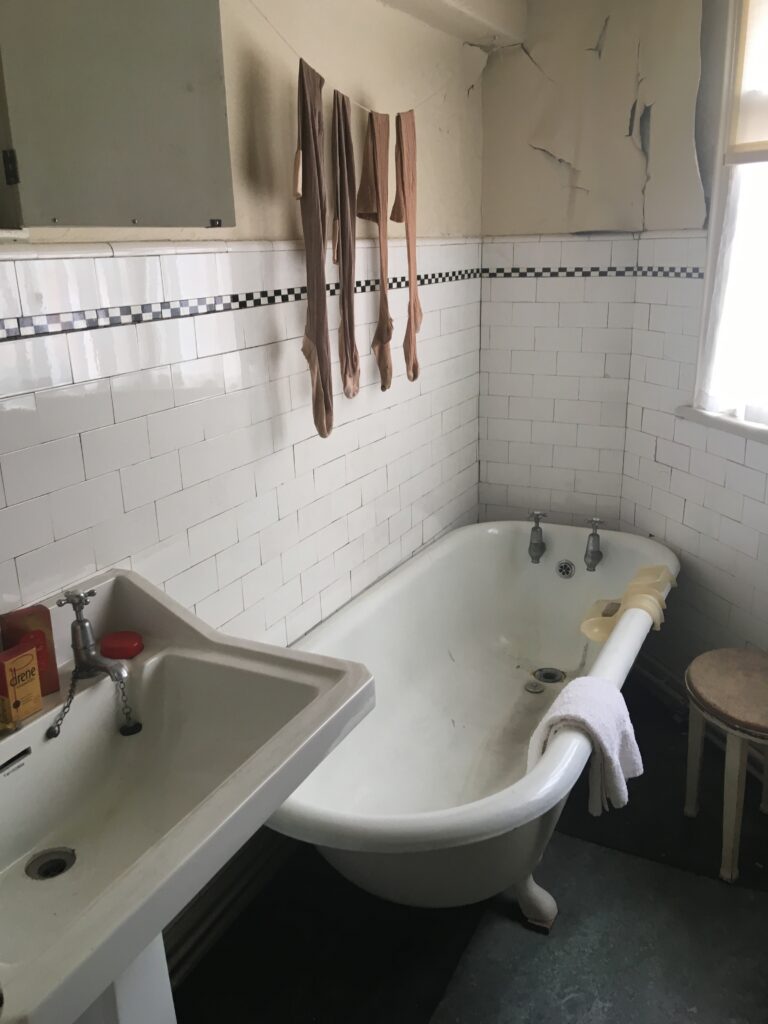
1930s roll top baths were simpler in design with plain ‘spoon’ feet rather than the earlier ‘claws’.
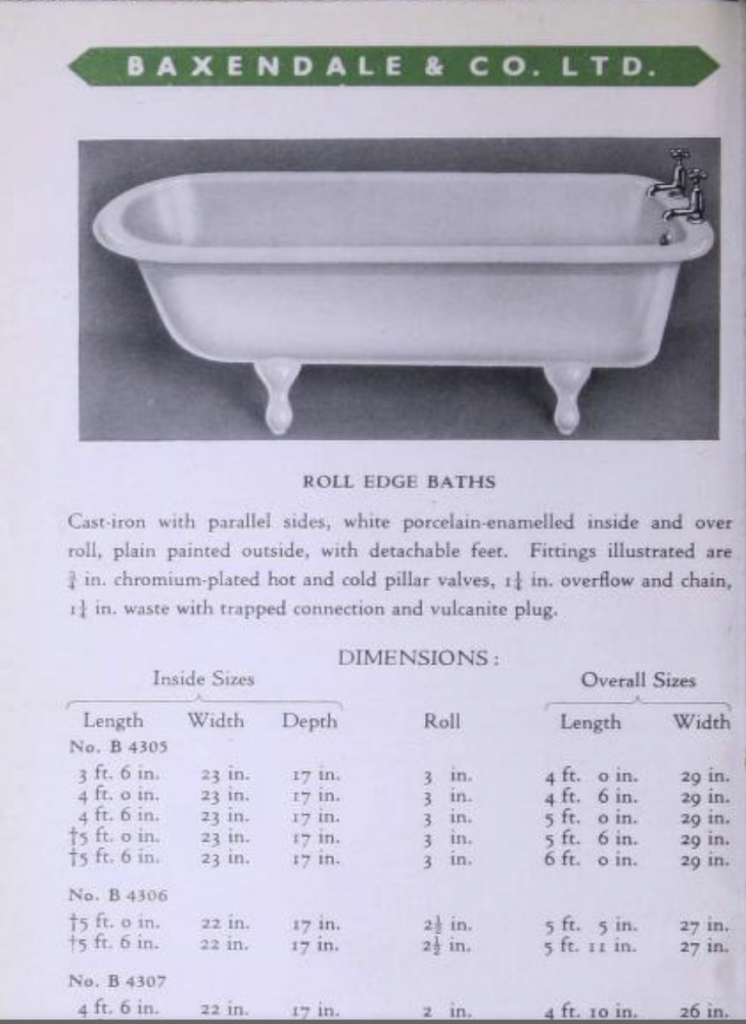
The cheapest taps were ‘torpedo’ style which sat within the bath. You also had the option to buy just the cold tap if there was a hot water geyser like in my bathroom.
Likewise, high-level cast iron cisterns were the lowest price for toilets.
Whilst colour suites were available and most desirable, white pottery was the mainstay for the average bathroom.
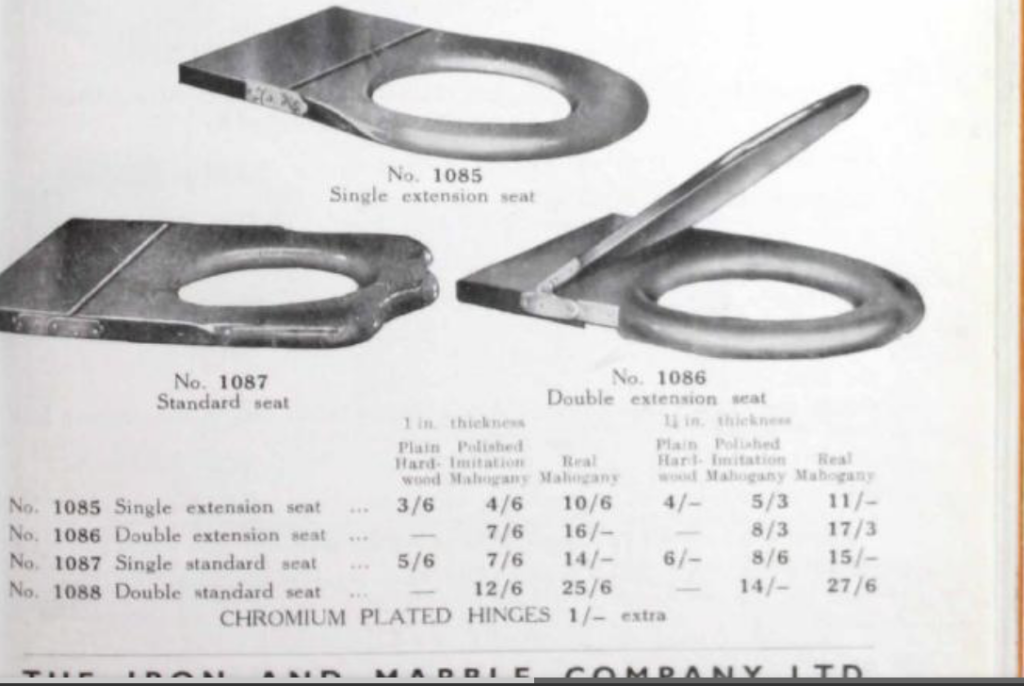
Homeowners could buy plastic toilet seats from the late 1930s as the ‘modern’ and pricier choice. However, I’ve opted for a basic lidless wooden seat as shown below.
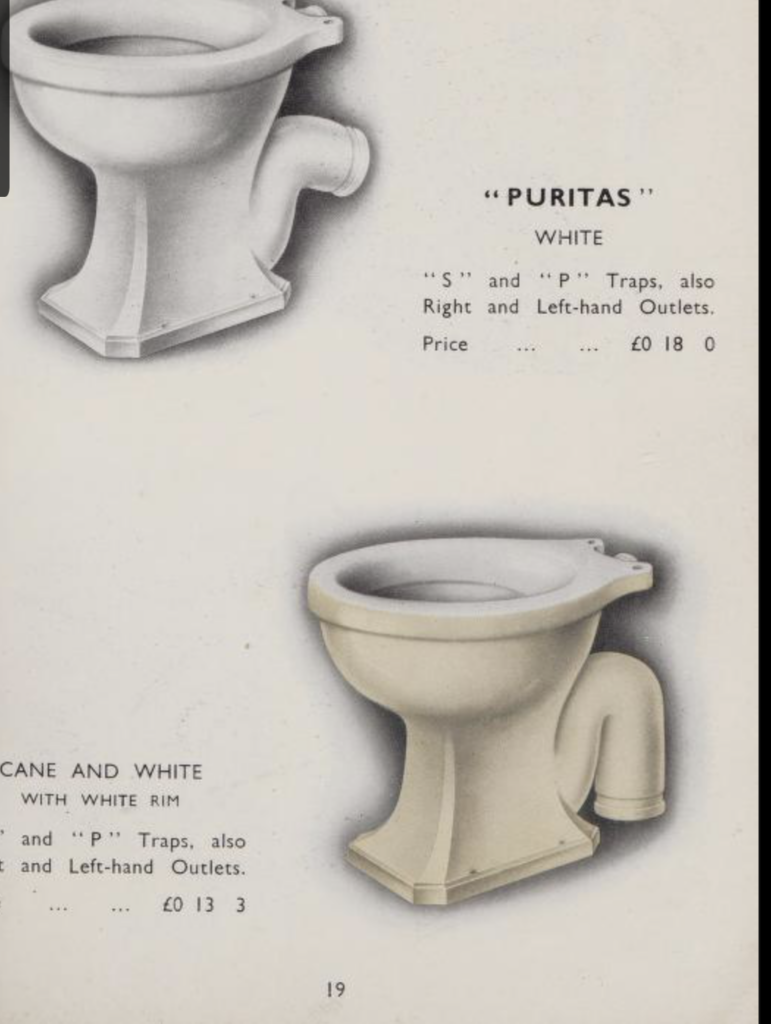
The most popular toilet pan design had Art Deco style cut corners as shown in this 1933 Johnson’s catalogue. I’ve purchased the same vintage ‘Puritas’ model.
I chose to house a modern sink in a cupboard along with my washing machine. I believe an earlier washstand with a jug and bowl was used for the daily wash with hot water coming from the bath geyser.
Luckily, I managed to find an antique geyser in good condition, which is supplying the bath with cold water as it is safer for us to have the hot water come out of the one ‘cold’ bath tap.
Tiling and wallcoverings
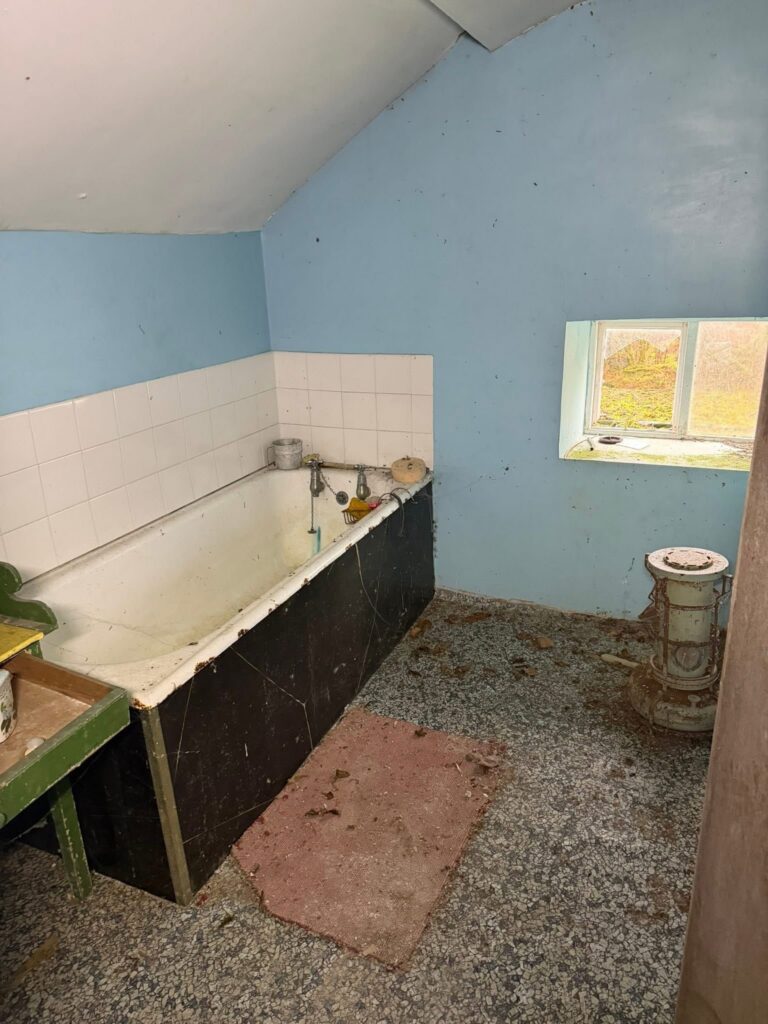
The average newbuild 1930s house had a small bathroom, so it was economical for the house builder to tile all four walls.
The height of your tiles denoted your class status – the higher the tiling the more wealthy you were.
However, most bathrooms in 1930s homes had white tiles to waist height topped with narrow chequerboard or Greek-key border tiles.
Photographs of older houses with 1930s or 1950s bathrooms suggest tiling was more sparing and was mainly used around the bath.
Surprisingly, people often used ‘washable wallpapers’ as the main wall decoration as an alternative to oil painted walls.
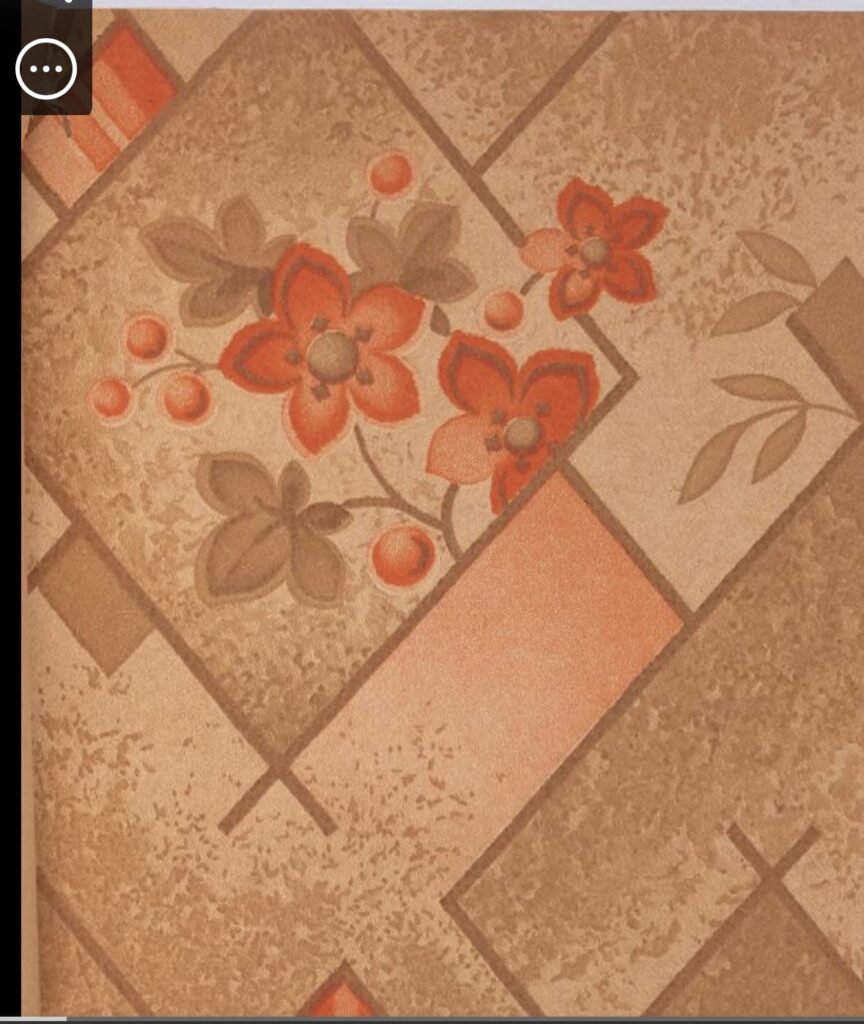
Tiling the whole of my bathroom was unlikely due to its large size. Furthermore, evidence suggests previous owners never painted the original lime plaster walls with oil paint. Therefore, I installed a 1930s Chinese inspired wallpaper alongside the bath tiles.
Linoleum flooring
Linoleum flooring continued to be popular in bathrooms in the 1930s.
Marbled patterns in green or blue were common along with abstract Art Deco patterns.
Key takeaways
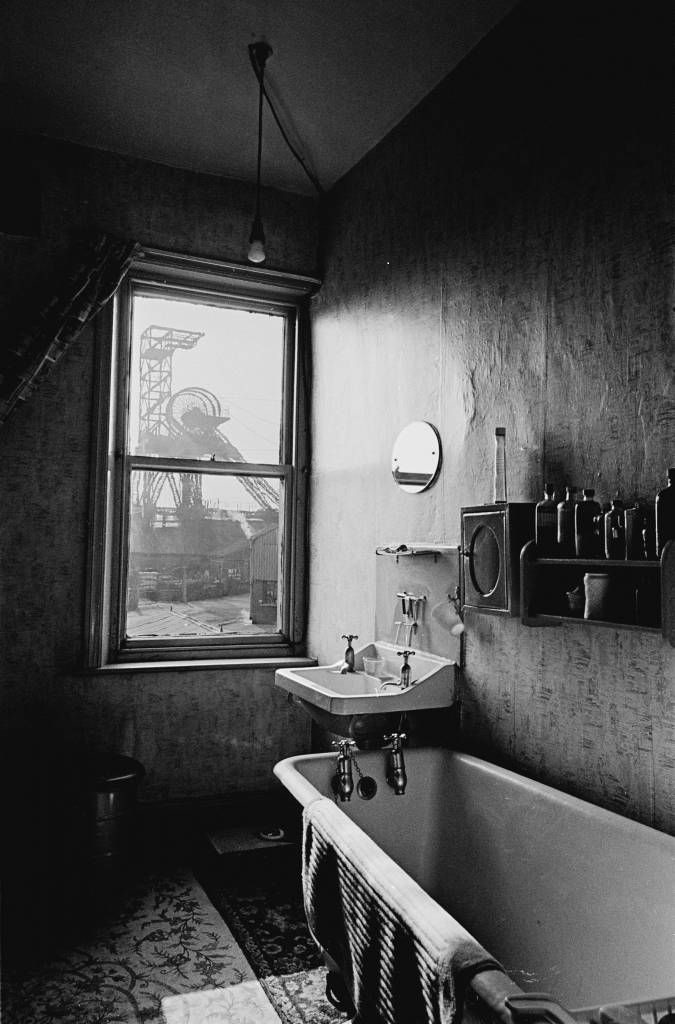
- Not all 1930s bathrooms had wall to wall tiling. Older properties with later bathrooms often had little or no tiling and were just oil painted on the walls or had washable wallpaper.
- Ordinary bathroom tiles were white and laid out brick style with tight joints and strip geometric border tiles.
- Roll top baths were the cheapest to buy, but the more fashionable black panelled baths were still affordable.
- Likewise, poorer homeowners opted for the cheaper high cisterns and white cut-corner toilet pans.
- Linoleum in marbled or Art Deco styles were the main form of bathroom flooring.
- Posher bathrooms had all over tiles in mottled green, pink or blue with a matching coloured suite, including a fitted bath and a low-level toilet cistern. Large glass ‘Vitrolite’ tiles in green and black was the ultimate wallcovering.








Leave a Reply